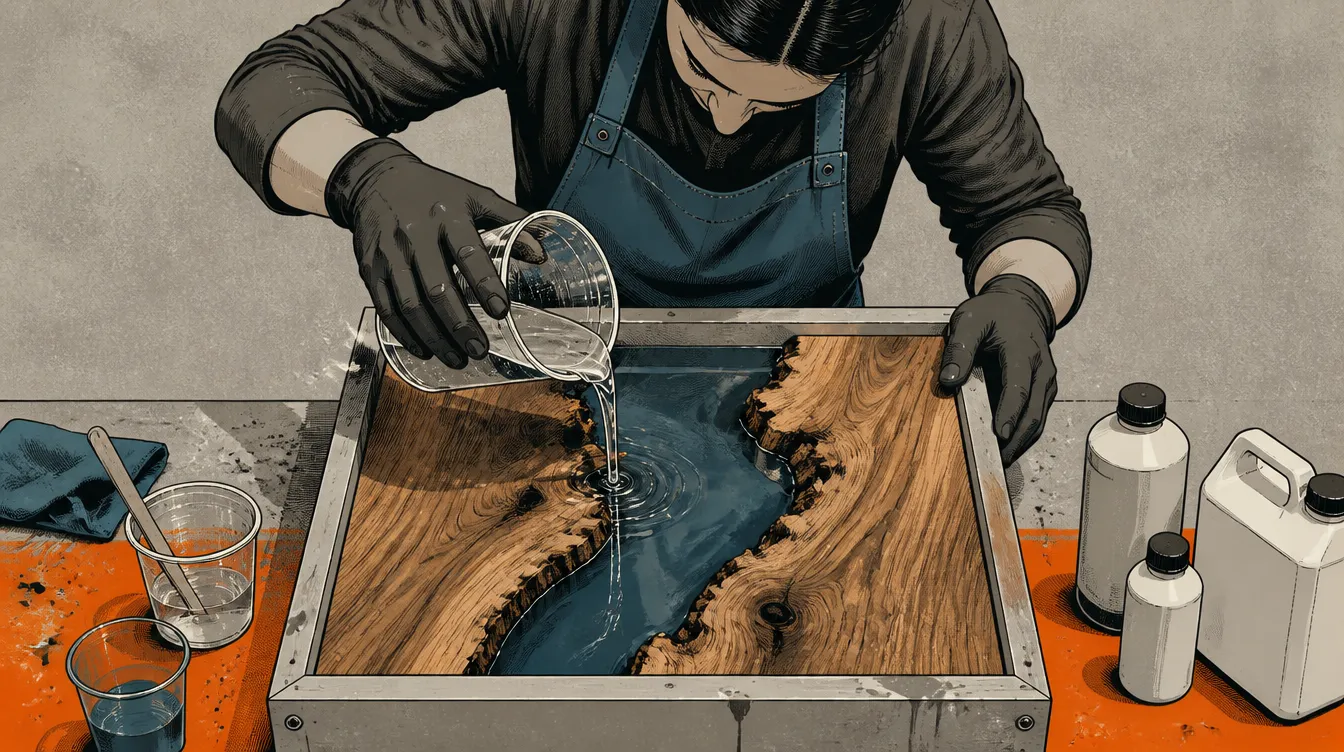
Epoxy resin for crafts, the clear, pourable formula used for tumblers, jewelry, and coasters, is a different product from the thick, moldable epoxy putty sold for structural repairs. No dedicated clear casting resin test exists in the testing corpus behind this guide, so it is worth saying plainly up front: the specific pourable art resin most craft shoppers are looking for was not part of any cited test. What was tested, in a genuinely rigorous 12-brand comparison, is structural epoxy putty, a related but different formula, and several of the same brand names (JB Weld, Gorilla, Loctite) sell both products, which makes the brand-quality lessons from that test worth knowing before choosing a craft resin from the same manufacturer.
What the testing showed
The numbers below come from Project Farm's epoxy putty comparison, a 12-brand test. This test covers thick, moldable structural epoxy putty, not clear pourable casting resin, and the guide is upfront about that difference, but the strength testing and brand-to-brand variation it reveals is directly useful context.
Every product was tested for tap and pullout strength (average of 3 samples, in pounds) and compressive strength on a 1-inch cube (in PSI).
JB Weld won on value, KBS NuMetal won on raw pullout strength

Winner
JB Weld
Price shown in test: $4.98 for 2 oz, $2.49 per oz
Affiliate link. We may earn a commission at no extra cost to you.
JB Weld Steel Stick, at just 2.49 dollars per ounce, one of the cheapest products tested, finished as the overall winner, with the video crediting it directly: "Really impressed with some of these brands including JB Weld, which definitely came out on top overall, especially when you consider the value price." It posted the best compressive strength of the entire field at 1,250 PSI (equivalent to 3,925 lb) and a strong average pullout strength of about 1,264 lb, second only to KBS NuMetal.
KBS NuMetal, at 1.43 dollars per ounce, actually posted the single highest pullout strength of all 12 products at about 1,615 lb, though its compressive strength, at 850 PSI, was well behind JB Weld's.
Price did not track strength cleanly
Hercules Pro Epoxy 20, at 4.54 dollars per ounce, the most expensive product on a per-ounce basis among the top performers, posted a respectable but not leading result: about 1,247 lb pullout strength and 1,125 PSI compressive strength, both behind the far cheaper JB Weld.
At the bottom of the field, A+B epoxy putty, at 2.59 dollars per ounce, posted the worst results of all 12 brands on both measurements, an average pullout strength of just 271 lb, "more than 1,000 lb below the leader," and a compressive strength of only 200 PSI. Pratley Steel Putty, at 4.48 dollars per ounce, one of the pricier products tested, also struggled, posting just 125 PSI compressive strength, the weakest of the entire field on that specific measurement despite its higher price.
How to read this for your own purchase
Since a clear pourable craft resin was not part of any cited test, use the brand-reliability lesson from the structural putty test as one input, and prioritize craft-resin-specific specs (UV resistance, cure clarity, food safety certification) that only apply to the pourable product.
A brand that performs well on structural strength testing is a reasonable signal of overall formulation quality, even across a different product line from the same manufacturer, though it is not a substitute for checking the craft resin's own specific certifications.
For food-safe or skin-contact craft projects (coasters, jewelry, cutting boards), verify the specific resin carries an actual food-safe or FDA-compliant certification on the product itself, since that certification does not carry over from a structural epoxy putty in the same brand's lineup.
Consider working volume and pour depth before choosing between a structural putty and a pourable craft resin. The 12 products in this test are moldable putties meant for small repair volumes, applied by hand in a specific ratio, while a craft resin is typically poured in thin layers to avoid excess heat buildup during cure, since a resin poured too thick in one layer can overheat, crack, or yellow prematurely, a failure mode structural putty does not share since it cures in much smaller working masses.
A few universal rules the structural epoxy data supports for any epoxy purchase, craft resin included:
- Price per ounce is a weak predictor of quality. JB Weld, one of the cheapest products tested, delivered the best overall combination of strength and value, while some pricier competitors underperformed badly.
- Mix ratio precision matters enormously for cure strength. The structural epoxies with the strongest tested results are formulated for a forgiving, easy-to-measure mix ratio, and the same care in following a craft resin's specific mix instructions is what separates a clear, hard cure from a cloudy or tacky one.
- UV exposure causes yellowing in clear resin over time, a consideration entirely separate from the structural strength measured in this putty test, so check specifically for a UV-resistant formulation if your craft project will see sunlight.
Browse more adhesives and epoxies judged on real strength numbers on the adhesives, glue and tape hub.