Which Chainsaw Bar And Chain Oil Brand Wins?
In our test we compared 6 chainsaw bar and chain oil options head to head. Harvest King came out on top. See the measured results, the runner-up, the budget pick, and a link to the full test video.

Harvest King
Price shown in test: $10 per gallon (about $2.50 per quart)
Affiliate link. We may earn a commission at no extra cost to you.
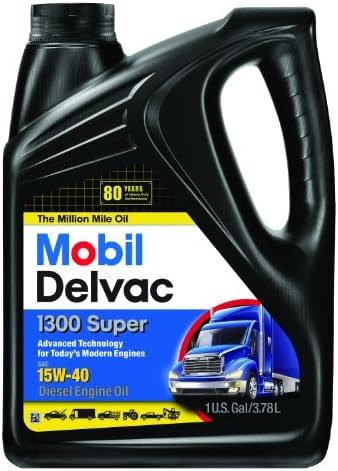
Mobil Delvac
Affiliate link. We may earn a commission at no extra cost to you.
The quick take
The short version of why each pick lands where it does, built straight from the measured results.
“the very affordable Harvest King dominated the showdown with an average finish of 1.7”
The measured results
Every number below is read straight from the test. Products are listed in the order they finished.
Cutting Test
- 1Harvest King
bar temperature 250 F (coolest of all six oils); average chain wear 1.89 mm (best of all six oils in the initial test recap, though see note on a conflicting 1.95 mm figure for Oregon)
- 2Mobil Delvac SAE 30 (motor oil, not a dedicated bar and chain oil)
bar temperature 280 F (2nd coolest of all six); average chain wear 2.2 mm (transcript says '2.2 mimet,' resolved to mm)
- 3Husqvarna
bar temperature 310 F (hottest of all six oils, about 60 F hotter than Harvest King); average chain wear 2.22 mm (most wear of all six oils in the initial test recap)
- 4Stihl
bar temperature 295 F (2nd hottest); average chain wear 2.11 mm, described in the closing wear recap as finishing 3rd overall (matches the earlier individual mention of 2.11 mm)
- 5Echo
bar temperature 286 F; average chain wear 2.2 mm, described as the same wear result as Mobil Delvac
- 6Oregon
bar temperature 291 F; average chain wear given as 1.86 mm on first mention ('the chain did experience less wear at 1.86 mm'), but the closing wear-comparison recap instead states 'Oregon finished in a close second at 1.95' behind Harvest King's 1.89 mm; these two figures (1.86 vs 1.95) conflict and are both kept here rather than silently reconciled
Flow Test Ambient
- 1Harvest King
won its 3-lane heat at 3.39 seconds (fastest of all six oils at ambient temperature)
- 2Mobil Delvac SAE 30 (motor oil, not a dedicated bar and chain oil)
finished 2nd in its heat at 4.43 seconds
- 3Husqvarna
finished 3rd (last) in its heat at 8.77 seconds
- 4Stihl
finished 3rd (last) in its heat at 8.67 seconds
- 5Echo
finished 2nd in its heat at 7.12 seconds
- 6Oregon
won its heat at 5.36 seconds
Flow Test Cold
- 1Harvest King
won its 3-lane heat at 18.5 seconds after 24 hours in the freezer (fastest of all six oils in the cold test)
- 2Mobil Delvac SAE 30 (motor oil, not a dedicated bar and chain oil)
finished 2nd in its heat at 32 seconds
- 3Husqvarna
finished 3rd (last) in its heat at 1 minute 20 seconds
- 4Stihl
finished 3rd (last) in its heat at 2 minutes
- 5Echo
finished 2nd in its heat at 94 seconds
- 6Oregon
won its heat at 46 seconds
Lubricity Test
- 1Harvest King
wear scar 'just under 7 mm' on first mention, stated precisely as 6.98 mm in the closing lubricity recap, finishing 2nd behind Mobil Delvac's 6.34 mm
- 2Mobil Delvac SAE 30 (motor oil, not a dedicated bar and chain oil)
wear scar 6.34 mm, the smallest (best) of all six oils, winning the lubricity test outright
- 3Husqvarna
wear scar 7.92 mm, described as struggling badly with 'the largest wear scar yet' at that point in testing; narrator notes Harvest King 'definitely offers a lot better wear protection' in the direct comparison
- 4Stihl
wear scar 9.46 mm, the largest (worst) of all six oils; narrator notes 'a lot of grinding' and very high energy use during the test, calling the result 'surprising'
- 5Echo
wear scar 8.51 mm; narrator notes it is 'not nearly as tacky' as Harvest King, Husqvarna, or Stihl, with a lot of noise from the tester
- 6Oregon
wear scar 7.43 mm, finishing 3rd overall in the closing lubricity recap behind Mobil Delvac (6.34 mm) and Harvest King (6.98 mm); narrator: 'both bar chain oils perform very well but it's definitely a win for the $10 Harvest King' in the direct comparison
Evaporative Loss Test
- 1Harvest King
starting weight given in the transcript as a garbled '394.455 G' with no clear ending weight; the narrator states Mobil Delvac's 1.04 g loss was 'half as much as Harvest King,' implying an approximate 2.08 g loss for Harvest King, but this is not an explicit verbatim figure and the raw weights are garbled. Note: the exact same garbled string '394.455 G' also appears later for Echo's starting weight; flagged as an unresolved duplicate garbled figure, not assumed to mean the two oils shared a literal starting weight.
- 2Mobil Delvac SAE 30 (motor oil, not a dedicated bar and chain oil)
started at approximately 42.99 g (transcript '4299 G'), ended at approximately 42.886 g (transcript '42886'), a loss of only 1.04 g, described as half as much evaporative loss as Harvest King
- 3Husqvarna
went from 44.8 g to 42.66 g (transcript '42.6 6' g), a loss of 2.14 g, described as 'the most evaporative loss yet' among the first group of three oils tested
- 4Stihl
went from 44.64 g (transcript '44.6 4') to 43.91 g (transcript '4391'), a loss of only 0.73 g, described as 'the best yet' among the second group of three oils and finishing 2nd overall behind Oregon's 0.41 g
- 5Echo
transcript gives Echo's starting weight as the same garbled string used earlier for Harvest King, '394.455 G,' and describes the loss only as 'the most yet' with no ending weight or explicit loss figure given; flagged as an unresolved duplicate garbled figure and a missing numeric result
- 6Oregon
loss of only 0.41 g, the best (lowest) evaporative loss of all six oils; narrator: 'very impressive... the organ came out on top'
Lab Analysis
- 1Harvest King
no excessive contamination; detergent/dispersant level of 13 parts per million (lowest of the three oils given lab numbers)
- 2Mobil Delvac SAE 30 (motor oil, not a dedicated bar and chain oil)
highest detergent/dispersant level of the three oils given lab numbers, at 3,930 parts per million; narrator credits this and a 'robust anti-wear additive package' for winning the lubricity test
- 3Husqvarna
no excessive contamination; detergent/dispersant level of 325 parts per million
- 4Stihl
narrator states surprise at 'the lack of anti-wear additive in the steel Barn chain oil,' consistent with its worst lubricity wear-scar result; no specific ppm figure given for Stihl in the lab section
- 5Echo
no specific ppm figure given for Echo in the lab section
- 6Oregon
no specific ppm figure given for Oregon in the lab section
How it was tested
- real-world cutting test (chainsaw bar temperature and average chain wear after running a full tank of fuel)
- oil flow race at ambient temperature (70 F, three-lane heats)
- oil flow race at cold temperature (approximately 10 F after 24 hours in the freezer, three-lane heats)
- lubricity/film-strength test (wear scar size under microscope, extreme pressure tester)
- evaporative loss/heat test (200 g of oil heated to approximately 330 F for 2 hours, weighed before and after)
- independent oil lab analysis (contamination check, detergent/dispersant content)
“the very affordable Harvest King dominated the showdown with an average finish of 1.7”