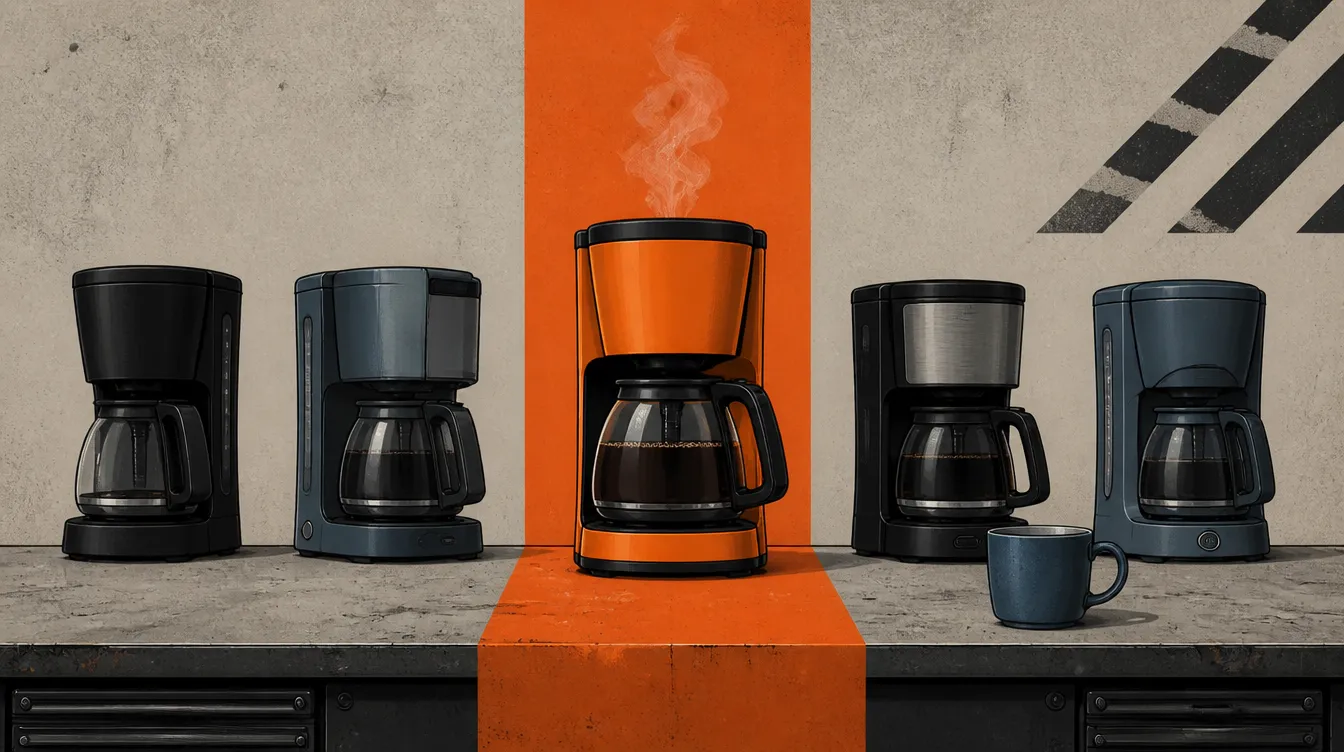
Which Coffee Maker Brand Wins?
In our test we compared 15 coffee maker options head to head. General Electric came out on top. See the measured results, the runner-up, the budget pick, and a link to the full test video.

General Electric
Price shown in test: $80
Affiliate link. We may earn a commission at no extra cost to you.
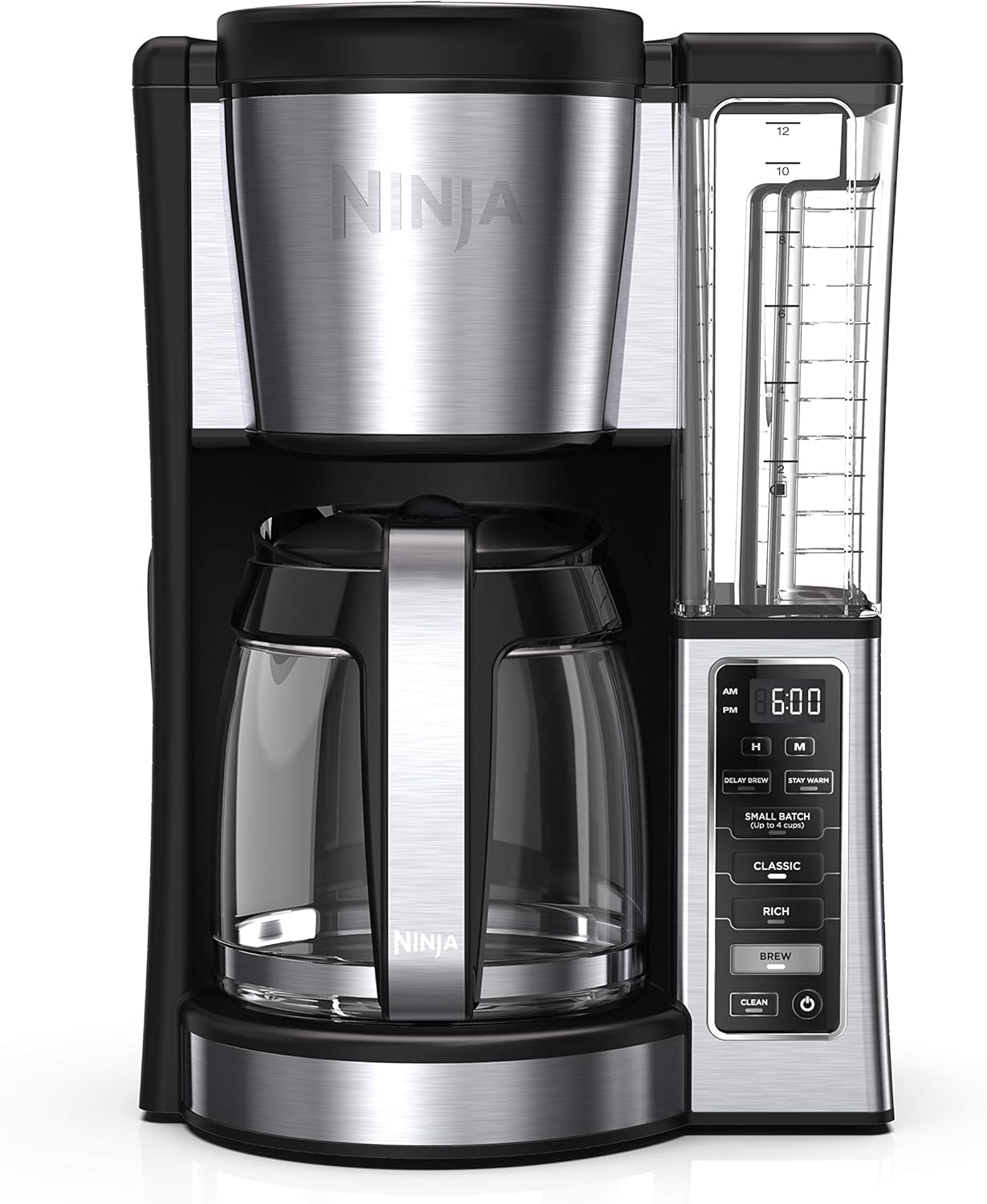
Ninja
Price shown in test: $70
Affiliate link. We may earn a commission at no extra cost to you.

Black+Decker
Price shown in test: $35
Affiliate link. We may earn a commission at no extra cost to you.
The quick take
The short version of why each pick lands where it does, built straight from the measured results.
“the General Electric came out on top with an average finish of 2.5”
Best in 1 of 8 measurements, including Coffee Extraction (TDS).
Placed top three in 1 of 8 measurements.
Placed top three in 1 of 7 measurements.
The measured results
Every number below is read straight from the test. Products are listed in the order they finished.
Made In
- 1General Electric
China
- 2Ninja
China
- 3Black+Decker
Mexico
- 4Proctor Silex
China
- 5Better Chef
China
- 6Mueller
China
- 7Amazon Basics
China
- 8Mr. Coffee
China
- 9Taylor Swoden
China
- 10Krups
China
- 11Hamilton Beach
China
- 12Braun
China
- 13Cuisinart
Indonesia
- 14Bunn
designed and assembled in USA
- 15Makita cordless coffee maker
China
Weight
- 1General Electric6.71 lb
- 2Ninja6.5 lb
- 3Black+Deckerclose to3.5 lb
- 4Proctor Silexjust over3 lb
- 5Better Chef2.76 lb
- 6Mueller
very close to 3 lb
- 7Amazon Basics2.92 lb
- 8Mr. Coffee3.41 lb
- 9Taylor Swoden3.76 lb
- 10Krups4.21 lb
- 11Hamilton Beach4.71 lb
- 12Braun6.3 lb
by far the heaviest at that point in the video
- 13Cuisinart6.29 lb
- 14Bunn6.23 lb
- 15Makita cordless coffee maker4.58 lb
with a 5 amp hour battery
Claims
- 1General Electric
claimed 1,500 W heating element, wide showerhead design, regular/bold brew, programmable
- 2Ninja
two brewing styles, adjustable warm plate, programmable up to 24 hours out
- 3Black+Decker
digital controls with quick touch programming, 2 hour auto shut off; host notes it had 20,000 sales in the past 30 days and is the least expensive programmable coffee maker he could find
- 4Proctor Silex10-cup
coffee maker, auto pause and pour, built-in cord storage, dishwasher safe pot and brew basket
- 5Better Chef12-cup
coffee maker, lighted power switch, swing-out filter basket, built-in cord storage
- 6Mueller12-cup
coffee maker, auto keep warm function, automatic power-down after 2 hours, water level window, durable permanent filter
- 7Amazon Basics
makes up to 12 cups, reusable filter, lit on/off switch, visible water window
- 8Mr. Coffee
makes up to 12 cups, illuminated on/off switch, cord storage; cannot be programmed unlike the Black and Decker
- 9Taylor Swoden950 W
programmable coffee maker, self-clean function, regular/bold brew strength setting, showerhead design
- 10Krups10-cup
coffee maker (most others make 12), claimed 900 W, powers down after 2 hours, reusable filter
- 11Hamilton Beach
wake up ready easy touch programming, front-fill design, water view window
- 12Braun14 cup
capacity claim, claimed 1,200 W heating element, claimed 'pure flavor technology', claimed to brew coffee 20% faster
- 13Cuisinart14-cup
capacity claim, BPA-free plastic, auto shut-off zero to 4 hours, regular/bold brew, programmable 24 hours out
- 14Bunn
claims to be the fastest 10-cup home coffee maker, claims a 4 minute brew time, claims the cleanest pour on the market via proprietary lid and spout design, switch-activated warmer
- 15Makita cordless coffee maker
works with Makita 12V, 14.4V, or 18V batteries (battery and charger not included), claims to brew one 5 oz cup of coffee in 5 minutes on the 18V battery, no paper filters needed (permanent drip filter included), claims up to three cups per 5 amp hour battery charge
Brew Time
- 1General Electricjust over7 minutes
one of the fastest measured
- 2Ninjaclose to9 minutes
the slowest measured
- 3Black+Decker7 minutes 40 seconds
- 4Proctor Silexclose to7.5 minutes
- 5Better Chef7.5 minutes
same as Proctor Silex
- 6Muellerclose to8.5 minutes
an extra minute compared to Proctor Silex and Better Chef
- 7Amazon Basicsabout7 minutes 50 seconds
- 8Mr. Coffee8 minutes 10 seconds
a little slower than most other brands
- 9Taylor Swoden8 minutes 10 seconds
same as Mr. Coffee
- 10Krups8 minutes 50 seconds
the most time yet at that point in the video
- 11Hamilton Beach7 minutes 50 seconds
1 minute faster than the Krups
- 12Braun7 minutes 15 seconds
the fastest time measured at that point in the video
- 13Cuisinart7 minutes 38 seconds
- 14Bunn
after the required initial setup/priming process, finished a brew in only 2 minutes, by far the fastest time measured of any coffee maker (not counting setup time)
- 15Makita cordless coffee maker5.5 minutes
Water Temp Fresh
- 1General Electric187.2 F2nd
second hottest (behind Ninja)
- 2Ninja191.1 F
hottest of all coffee makers tested
- 3Black+Decker183.2 F
moved into the lead among budget models at that point in the video
- 4Proctor Silex177.6 F
- 5Better Chef169 F
about 8 degrees cooler than the Proctor Silex
- 6Mueller181.9 F
the hottest water yet at that point in the video
- 7Amazon Basics171.1 F
10 degrees cooler than the Mueller
- 8Mr. Coffee177.8 F3rd
good enough for third place behind the Mueller at that point in the video
- 9Taylor Swoden176 F
almost as hot as Mr. Coffee
- 10Krups179.6 F
pretty hot
- 11Hamilton Beach178.7 F
about 1 degree cooler than the Krups
- 12Braun185.2 F
the hottest water measured at that point in the video
- 13Cuisinart183.2 F
hotter than most of the other brands
- 14Bunn184.8 F
hotter than most other brands
- 15Makita cordless coffee maker173.5 F
Water Temp After 1 (hr)
- 1General Electric185.9 F
about the same as the Ninja
- 2Ninja185.9 F
still very hot
- 3Black+Decker5 degrees
hotter than when fresh
- 4Proctor Silex175.5 F
2 degrees cooler
- 5Better Chef
dropped 15 degrees to 154 F, the largest drop of any coffee maker
- 6Mueller
lost 12 degrees to 174 F
- 7Amazon Basics
stayed about the same at 171.3 F
- 8Mr. Coffee
cooled down by 3 degrees
- 9Taylor Swoden
cooled by 6 degrees
- 10Krups6 degrees
hotter, to 185.5 F
- 11Hamilton Beach
warmed up by approximately 6 degrees
- 12Braun
cooled down by about 5 degrees to 180.5 F
- 13Cuisinart
within 1 degree of where it started, at 183.9 F
- 14Bunn
cooled 12 degrees to 172.8 F
- 15Makita cordless coffee makernot tested
Pour Test
- 1General Electric
no leaks, cover has a twist and lock design
- 2Ninja
no dribbles or water puddles
- 3Black+Decker
performed quite a bit better than Proctor Silex, Better Chef, and Mueller, though it did experience a small dribble
- 4Proctor Silex
made quite a mess when poured quickly, described as not designed for people who move fast
- 5Better Chef
left more of a mess than the Proctor Silex
- 6Mueller
performed even worse than the Proctor Silex and Better Chef; coffee pot spout is a leaker
- 7Amazon Basics
very well designed, no spills or drips
- 8Mr. Coffee
no dribbles or spills
- 9Taylor Swoden
struggled at the beginning of the pour, made quite a mess
- 10Krups
performed about the same as the Taylor Swoden, with water spilling onto the table
- 11Hamilton Beach
great job with no loss of water, has a plastic band around the pot top to channel water flow; the most user-friendly water fill area of the group
- 12Braun
made quite a mess, similar spout design issue to the Proctor Silex
- 13Cuisinart
a leaker, cover snaps in place but does not offer a very good seal
- 14Bunn
performed very well, no leaks or spills, matching its cleanest-pour claim
- 15Makita cordless coffee makernot tested
Coffee Extraction (TDS)
- 1General Electric637 parts per million
one of the best results
- 2Ninja638 parts per million2nd
moved into second place behind the Hamilton Beach
- 3Black+Decker625 parts per million2nd
second place behind Amazon Basics at that point in the video
- 4Proctor Silex616 parts per million
- 5Better Chef621 parts per million
a little better than the Proctor Silex
- 6Mueller622 parts per million
- 7Amazon Basics633 parts per million
took the lead at that point in the video
- 8Mr. Coffee614 parts per million
a little low
- 9Taylor Swoden627 parts per million2nd
moved into second place at that point in the video
- 10Krups628 parts per million
barely edging out the Taylor Swoden
- 11Hamilton Beach655 parts per million
by far the best result of any coffee maker (Makita excluded due to using a permanent filter)
- 12Braun612 parts per million
a little short on extraction, the lowest result of the group
- 13Cuisinart
transcript states two different figures for this brand: 619 parts per million during the main test sequence, then the recap sentence says 'the Ninja and Cuisinart also performed very well at 638' (tied with the Ninja). Both numbers kept verbatim; likely a caption/number transcription inconsistency, not resolved with certainty.
- 15Makita cordless coffee maker663 parts per million
the highest of any coffee maker tested, though the host notes using a permanent filter (instead of the paper filter used for all other brands) more than likely gave the Makita an unfair advantage
- 14Bunnnot tested
All measurements (4 more)+
Measured Wattage
- 1General Electric1,190 W
most powerful heating element measured of all the coffee makers
- 2Ninja1,140 W
- 3Black+Deckeraround1,000 W
most powerful heating element among the budget group at that point in the video
- 4Proctor Silex965 W
a pretty strong heating element for a budget coffee maker
- 5Better Chef935 W
not quite as powerful as the Proctor Silex
- 6Mueller950 W
- 7Amazon Basics905 W
the least powerful heating element measured at that point in the video
- 8Mr. Coffeearound940 W
- 9Taylor Swoden975 W
a little better than average but not as much heat as the Black and Decker
- 10Krupsaround895 W
the least powerful heating element measured yet at that point in the video
- 11Hamilton Beach970 W
a little more powerful than average
- 12Braun1,175 W
by far the most powerful heating element measured at that point in the video
- 13Cuisinartaround1,150 W
- 14Bunnnot tested
- 15Makita cordless coffee makernot tested
Actual Capacity
- 1General Electric
measured at 11.1 cups against a 12-cup claim
- 2Ninja
measured at 11.5 cups against a 12-cup claim, the closest of any brand to its stated capacity
- 4Proctor Silex47.2 oz
of water landed right at the 10-cup mark, but that only works out to eight 6 oz cups, described as two cups short
- 5Better Chef47.2 oz
of water split between the 9 and 10 cup marks
- 6Mueller47.2 oz
of water landed just below the midpoint between the 8 and 10 cup marks
- 7Amazon Basics47.2 oz
of water split evenly between the 8 and 10 cup marks
- 8Mr. Coffee47.2 oz
of water looked to be around 8.5 cups
- 9Taylor Swoden47.2 oz
of water looked to be around 8.5 cups
- 10Krups
water level looked to be around 8.5 cups; narrow 2.5 inch wide water fill opening
- 11Hamilton Beach47.2 oz
of water landed pretty much right on the 9 cup mark
- 12Braun
measured at 12.3 cups against the claimed 14-cup capacity
- 13Cuisinart
measured at 12.2 cups against the claimed 14-cup capacity
- 3Black+Deckernot tested
- 14Bunnnot tested
- 15Makita cordless coffee makernot tested
Overall Result
- 1General Electric
came out on top with an average finish of 2.5 across graded performance categories; called a good all-around coffee maker with the most powerful heating element
- 2Ninjanot tested
- 3Black+Deckernot tested
- 4Proctor Silexnot tested
- 5Better Chefnot tested
- 6Muellernot tested
- 7Amazon Basicsnot tested
- 8Mr. Coffeenot tested
- 9Taylor Swodennot tested
- 10Krupsnot tested
- 11Hamilton Beachnot tested
- 12Braunnot tested
- 13Cuisinartnot tested
- 14Bunnnot tested
- 15Makita cordless coffee makernot tested
Actual Output
- 15Makita cordless coffee maker
produced a full 9 oz cup, better than the advertised 5 oz claim
- 1General Electricnot tested
- 2Ninjanot tested
- 3Black+Deckernot tested
- 4Proctor Silexnot tested
- 5Better Chefnot tested
- 6Muellernot tested
- 7Amazon Basicsnot tested
- 8Mr. Coffeenot tested
- 9Taylor Swodennot tested
- 10Krupsnot tested
- 11Hamilton Beachnot tested
- 12Braunnot tested
- 13Cuisinartnot tested
- 14Bunnnot tested
How it was tested
- actual brewed capacity vs claimed cup capacity
- measured heating element wattage
- brew time
- water temperature immediately after brewing
- water temperature after 1 hour on the warmer
- water purity/TDS after passing through the machine (using distilled water)
- pour spout spill and leak test (fast pour and fast fill)
- coffee extraction strength (TDS parts per million from actual coffee grounds)
“the General Electric came out on top with an average finish of 2.5”