Gas Chainsaw 2026 Test: Which Brand Wins?
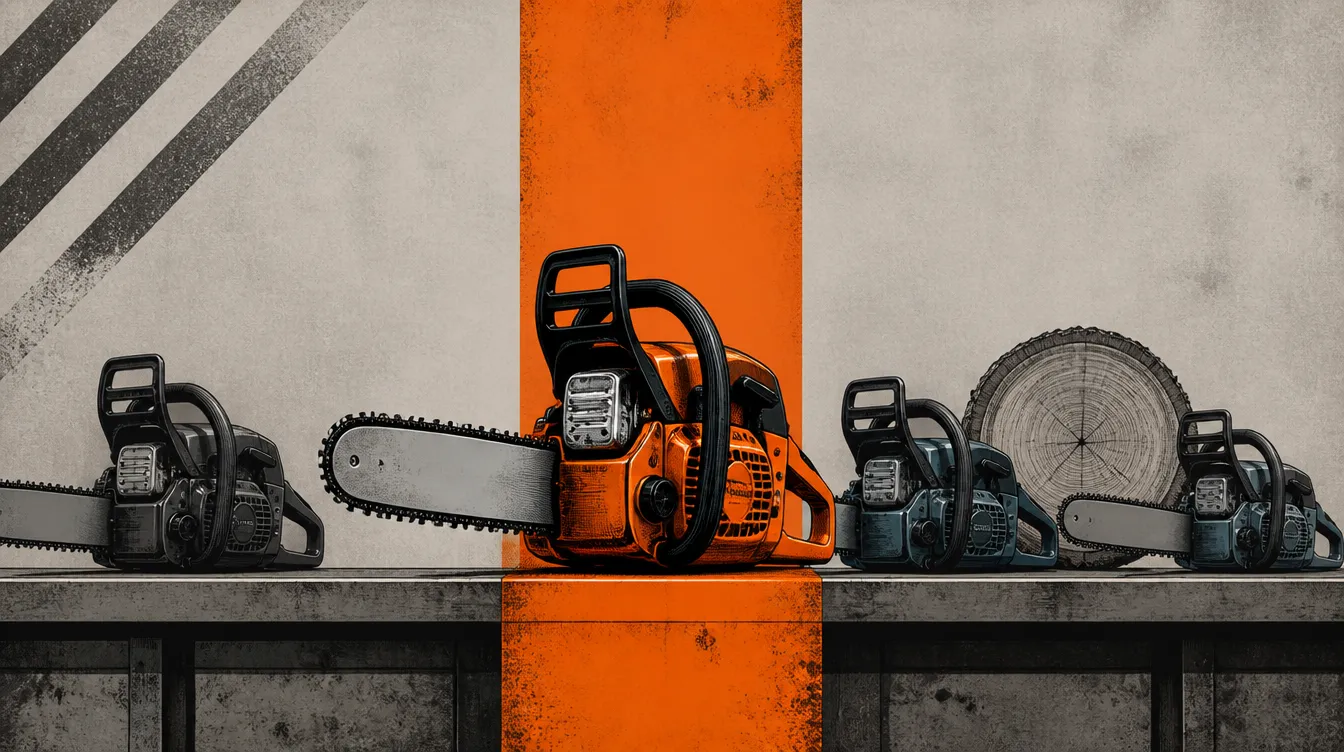
This 2026 head-to-head test of 8 gas chainsaw options has the measured results for each. See how they ranked and watch the full test video.

VEVOR
Price shown in test: $96
Affiliate link. We may earn a commission at no extra cost to you.
The quick take
The short version of why each pick lands where it does, built straight from the measured results.
Placed top three in 2 of 12 measurements.
The measured results
Every number below is read straight from the test. Products are listed in the order they finished.
Claimed Specs
- 1VEVOR18-in
bar, 52cc two-cycle engine, claims 2.55 horsepower, claims max RPM of 12,000, made in China
- 2BILT HARD18-in
bar, 46cc engine, claims 2.4 horsepower, claims a rated speed of 8,500 RPM, wing-nut-held air filter, four bucking spikes described as not very sharp, made in China
- 3Ryobi18-in
bar, 38cc engine, the smallest displacement in the lineup, claims an anti-vibration handle, four bucking spikes described as not too aggressive, reusable foam air filter, bar oil and fuel tank at the rear for easy access, made in China with further processing in Vietnam
- 4Troy-Bilt18-in
bar, 42cc engine, claims spring assist technology for easy pull starts, claims a low kickback bar and chain, claims a lightweight design, five felling spikes described as sticking out excessively, made in China with globally sourced materials
- 5ECHO18-in
bar, 45cc engine, claims a professional-grade two-stroke motor, designed for 89 octane or higher, threaded self-securing air filter, most aggressive felling spikes at time of introduction, large bar/chain oil port, made in Japan
- 6Husqvarna 440
claims Smart Start easy startup, 40.9cc two-stroke engine, claims 2.4 horsepower, large fuel fill port, felling spikes described as just as aggressive as the Echo's, durable side cover secured by two metal dowels and a threaded stud, snap-in air filter, made in Sweden
- 7Stihl MS25045.4cc
engine, inward-facing clutch and outward-facing sprocket for easy bar and chain installation, claims 3 horsepower, claims a side-access chain tensioner, most aggressive felling spikes in the lineup, easy-access air filter cover, no fuel primer bulb (unlike the other saws), made in USA
- 8DeWalt
battery powered, 20-in bar and chain (longer than the 18-in gas saws), 60V system, tested with a new chain and a fully charged 12 Ah battery
Weight
- 1VEVOR14.6 lb
without fuel and bar/chain oil
- 2BILT HARD14.57 lb
- 3Ryobi11.93 lb2nd
second lightest in the lineup
- 4Troy-Bilt12.51 lb
- 5ECHO13.53 lb
- 6Husqvarna 44011.85 lb
the lightest saw in the lineup
- 7Stihl MS25012.39 lb
- 8DeWalt15.71 lb
the heaviest saw in the entire lineup
Noise (dB)
- 1VEVOR114.6 dB
- 2BILT HARD
claims 114 dB, measured at 114.3 dB
- 3Ryobi113.8 dB
almost as loud as VEVOR and BILT HARD
- 4Troy-Bilt112.9 dB
the least noisy saw at the time of testing
- 5ECHO113.6 dB
about the same as Ryobi
- 6Husqvarna 440114.1 dB
one of the loudest at the time of testing
- 7Stihl MS250115.8 dB
by far the loudest in the lineup
- 8DeWalt96 dB
by far the quietest saw in the lineup
Cut Speed Test Log 3 Cuts
- 1VEVOR15.17s
15.12s, 16.0s, average 15.43 seconds
- 2BILT HARD20.41s
19.82s, 19.41s, average 19.93 seconds
- 3Ryobi22.88s
23.08s, 23.34s, average 23.1 seconds, the slowest in the lineup on this test
- 4Troy-Bilt18.98s2nd
19.25s, 18.89s, average 18.98 seconds, second place behind VEVOR at the time
- 5ECHO14.76s3rd
15.12s, 16.36s, average 15.41 seconds, barely moved into the lead over VEVOR at the time; finished third overall behind Stihl (12.01s) and DeWalt (14.15s)
- 6Husqvarna 44018.68s3rd
16.31s, 15.38s, average 16.79 seconds, moved into third place behind VEVOR and Echo; described as the slowest saw in the lineup to warm up
- 7Stihl MS25011.46s
11.87s, 12.7s, average 12.01 seconds, fastest average in the entire test-log test by a wide margin
- 8DeWalt14.08s2nd
14.14s, 14.24s, average 14.15 seconds, second place overall behind Stihl
Cut Speed With 5 Lb Weight 1 Pass
- 1VEVOR16.88 seconds
- 2BILT HARD22.41 seconds
- 3Ryobi22.67 seconds3rd
- 4Troy-Bilt21.27 seconds2nd
moved into second place
- 5ECHO
described only as 'only 0.01 seconds slower than the Beaver this time', derived as approximately 16.89 seconds from VEVOR's 16.88 second result rather than stated directly; flagging as derived
- 6Husqvarna 44021.84 seconds
- 7Stihl MS25012.65 seconds
fastest in this test, moved into the lead
- 8DeWalt16.52 seconds2nd
second place behind Stihl
Hardwood Cut Test 2 Cuts
- 1VEVOR21.48s3rd
22.46s, average 21.97 seconds, third place in this test
- 2BILT HARD37.39s
35.44s, average 36.42 seconds, the slowest average of any saw in this test
- 3Ryobi39.82s
39.46s, average 39.64 seconds, the slowest average of any saw, even slower than BILT HARD
- 4Troy-Biltjust under35s
just under 30s, average 32.44 seconds, about 10 seconds slower than VEVOR
- 5ECHOjust under25s
21.89s, average 23.44 seconds
- 6Husqvarna 44028.04s3rd
23.34s, average 25.69 seconds, moved into third place behind Echo
- 7Stihl MS25018.37s
17.81s, average 18.09 seconds, fastest average in the hardwood test, narrowly ahead of DeWalt's 18.25s
- 8DeWalt18.01s
18.48s, average 18.25 seconds, a very close second behind Stihl's 18.09s
Vibration
- 1VEVOR104.5 mm/s
- 2BILT HARD107.6 mm/s
- 3Ryobi24.6 mm/s
by far the best yet at the time of testing
- 4Troy-Bilt51.4 mm/s
- 5ECHO11.2 mm/s
by far the best yet at the time of testing
- 6Husqvarna 44010.5 mm/s
a little better than Echo
- 7Stihl MS25044.8 mm/s
vibrates a lot more than Husqvarna
- 8DeWalt9 mm/s
vibrates the least of any saw tested
Starting Ease
- 1VEVOR
started on the 7th pull attempt, worst starting result of any saw with a recorded attempt count
- 2BILT HARD
started on the 4th pull, tied with Troy-Bilt
- 3Ryobi
started on the 3rd pull, tied for the best starting result with the Echo
- 4Troy-Bilt
started on the 4th pull, tied with BILT HARD
- 5ECHO
started on the 3rd pull, tied for the best starting result with Ryobi
- 6Husqvarna 440
started on the 5th pull, not quite as good as most of the other chainsaws
- 7Stihl MS2509 pulls
by far the most of any saw, described as excessive for a brand new chainsaw
- 8DeWaltnot tested
All measurements (4 more)+
No Load (rpm)
- 1VEVOR
very close to 10,000 no-load RPM
- 2BILT HARDalmost11,700rpm
no-load RPM
- 3Ryobi11,780rpm
peak RPM
- 4Troy-Biltjust under12,000 RPM
the most engine speed yet at the time of testing
- 5ECHOjust under13,000 RPM2nd
most yet at the time of testing; final recap lists it as 12,950 RPM, second place behind Stihl
- 6Husqvarna 44012,514 RPM2nd
second place behind Echo
- 7Stihl MS25015,378rpm
peak RPM, by far the most in the lineup
- 8DeWaltnot tested
Dyno Torque To Stop Chain
- 1VEVOR23 lb3rd
third place overall
- 2BILT HARD16 lb
ran out of steam
- 3Ryobi17 lb
a little better than BILT HARD
- 4Troy-Bilt16 lb
about the same as BILT HARD
- 5ECHO24 lb2nd
moved into the lead over VEVOR at the time; finished second overall behind Stihl's 32 lb
- 6Husqvarna 44017 lb
same as Ryobi
- 7Stihl MS25032 lb
the most torque of any saw tested
- 8DeWaltnot tested
Start Force
- 1VEVOR39.1 lb
peak force
- 2BILT HARD38.8 lb
about the same as the VEVOR
- 3Ryobi32 lb
the least amount of force required at the time of testing
- 4Troy-Bilt21.9 lb
the least force required of any saw in the final pull-force test
- 5ECHO39.4 lb
the most force required at the time of testing
- 6Husqvarna 44037.3 lb
a little easier than Echo
- 7Stihl MS25044.8 lb
by far the most strength required of any saw tested
- 8DeWaltnot tested
Average Finish Score
- 1VEVOR4.4
- 5ECHO3.31st
tied for first place overall with Stihl
- 7Stihl MS2503.31st
tied for first place overall with Echo
- 2BILT HARDnot tested
- 3Ryobinot tested
- 4Troy-Biltnot tested
- 6Husqvarna 440not tested
- 8DeWaltnot tested
How it was tested
- ease of starting, pull count
- starting force required in lb
- no-load sprocket RPM
- sound level in dB
- weight
- chainsaw dyno torque, force to stop the chain
- cutting speed on a standard test log, 3 cuts
- cutting speed with 5 lb of added downward force, 1 pass
- cutting speed through hardwood, 2 cuts
- handle vibration in mm/s
- overall average-finish ranking across all graded categories
Brand head-to-head scoreboards featuring this test
Data notes and caveats
The video declares an explicit tie for first place: 'the Steel and the Echo finished in a two-way tie for first place with an average finish of 3.3.' Per the declared-tie rule this is recorded as winner:null, with the tie and each side's tradeoffs (Stihl cuts fastest but is loudest, hardest to start at 9 pulls, and vibrates most; Echo is more refined, starts in 3 pulls, and vibrates far less) preserved in both products' own notes. VEVOR is separately and explicitly named the best value pick (average finish 4.4, under $100). BILT HARD, Ryobi, Troy-Bilt, and Husqvarna are not given individual average-finish scores in the transcript's closing recap, only the top-tier tie and the value pick are quantified. DeWalt is a bonus battery-powered saw explicitly called out as an unfair comparison and excluded from the average-finish scorecard, though its raw cut-speed and vibration numbers are fully narrated and preserved. Every gas-saw brand name in this video is heavily caption-mangled: VEVOR appears as Vaver/Beaver/Fever, BILT HARD as Built Hard/Buildhart/Build Heart, Ryobi as Robi, Troy-Bilt as Troybuilt/Troy belt, Husqvarna as Husvarna/Husbarna/Husman, and Stihl as Steel; all resolved against the description's brand list, and for Husqvarna and Stihl further confirmed by real model numbers spoken in the transcript (Husqvarna 440, Stihl MS250). No meta chapters were present (chapters: null).