Which Oil Treatment Additive Brand Wins?
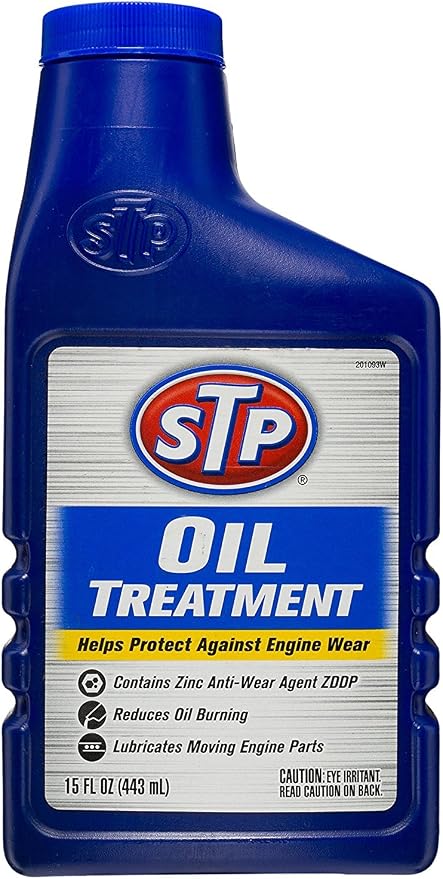
In our test we compared 3 oil treatment additive options head to head. New STP came out on top. See the measured results, the runner-up, the budget pick, and a link to the full test video.
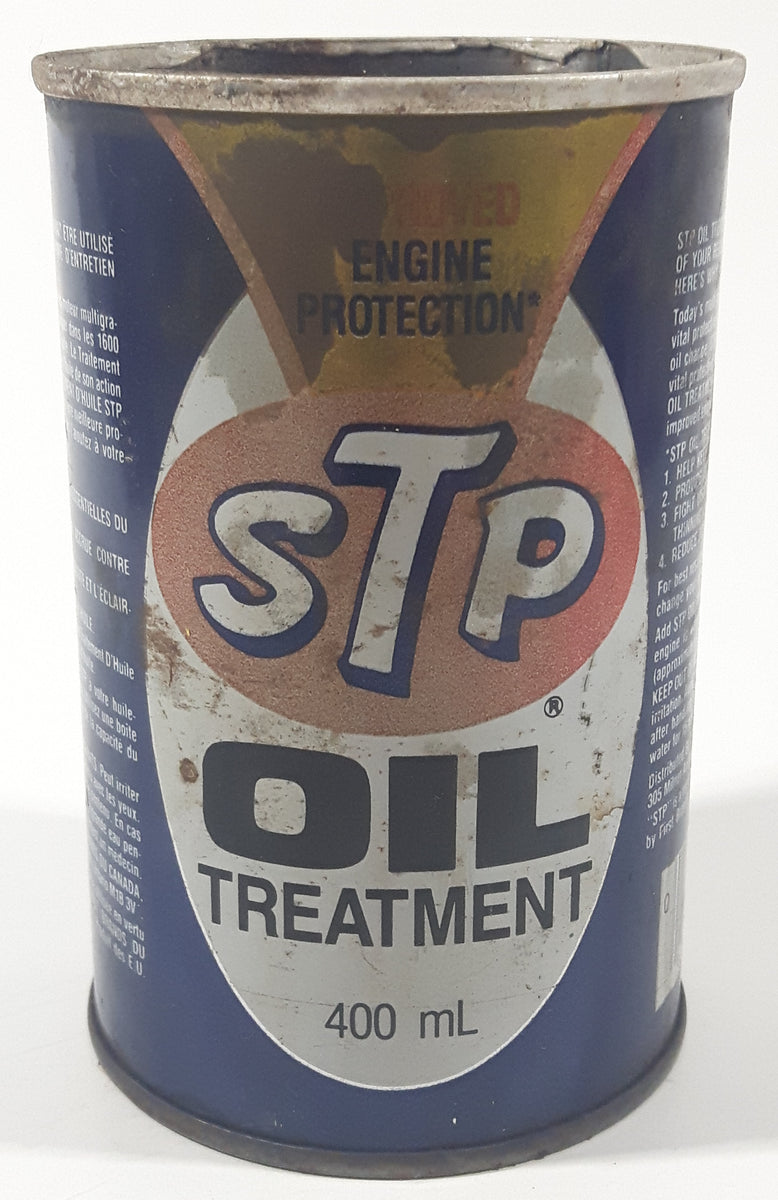
Vintage STP
Affiliate link. We may earn a commission at no extra cost to you.
The quick take
The short version of why each pick lands where it does, built straight from the measured results.
“So, is modern STP better than the vintage? Absolutely.”
The measured results
Every number below is read straight from the test. Products are listed in the order they finished.
Evaporative Loss Test
- 1STP New (2020) formula40
ml STP mixed into a 200 g total STP-and-SuperTech-oil sample, heated to 360F for 2 hours; container started at 394.58 g, ended at 393.31 g, a loss of 1.27 g, the worst (highest) evaporative loss of the three samples, described as performing a little worse than SuperTech alone
- 2STP Vintage 1981 formula
same 40 ml-in-200 g setup and 360F/2 hour heat exposure; container started at 430 g, ended at 428.85 g, a loss of 1.15 g, the best (lowest) evaporative loss of the three samples, narrator calls it a close win
- 3SuperTech Full Synthetic 5W-30
tested alone with no STP added; container started at 410.96 g, ended at 409.74 g, a loss of 1.22 g, in between the vintage STP (best, 1.15 g) and the new STP (worst, 1.27 g)
Film Strength Wear Scar Test
- 1STP New (2020) formula
wear scar very close to the vintage STP's, but the vintage narrowly beat it by a very small amount; SuperTech with either STP added performed better in this test than SuperTech alone
- 2STP Vintage 1981 formula
wear scar very close to the new STP's, but the vintage came out on top by a very small amount
- 3SuperTech Full Synthetic 5W-30
SuperTech alone had a larger wear scar than either STP-added sample; both STP additions improved on SuperTech alone in this test
Cold Oil Flow Race At Minus 40 F
- 1STP New (2020) formula
left the gate well after SuperTech but far ahead of the vintage STP, finishing second, ahead of the vintage by nearly the entire length of the track
- 2STP Vintage 1981 formula
struggled to get moving out of the gate and finished last of the three, well behind the new STP by nearly the entire length of the track
- 3SuperTech Full Synthetic 5W-30
out of the gate first and led the entire race, finishing about 10 inches ahead of the new STP, which itself finished far ahead of the vintage STP
Independent Lab Additive Analysis
- 1STP New (2020) formula260 ppm
calcium (versus 9 ppm for the vintage), TBN of 5.4 attributed by the narrator to this higher calcium content, viscosity classified thick, flash point 390, phosphorus and zinc figures (82 ppm and 127 ppm respectively) are given generically as 'STP' in the transcript's Supertech-comparison section without clearly separating vintage from new
- 2STP Vintage 1981 formula9 ppm
calcium (detergent/dispersant), viscosity classified thick and noticeably more viscous on opening than the new formula, flash point 395, phosphorus and zinc figures (82 ppm and 127 ppm respectively) are given generically as 'STP' in the Supertech-comparison section without clearly separating vintage from new
- 3SuperTech Full Synthetic 5W-3065 ppm
moly (STP had none), 188 ppm boron (STP had none), 1,138 ppm calcium (versus 260 ppm new STP and 9 ppm vintage STP), 510 ppm magnesium (versus 1 ppm for STP), 663 ppm phosphorus (versus 82 ppm for STP), 746 ppm zinc (versus 127 ppm for STP)
All measurements (2 more)+
Carbon Smoke Knock Test
- 1STP New (2020) formula
mixed 50/50 with the vintage STP and added to a smoking, knocking small engine holding 16 oz of oil; a pulled spark plug showed heavy STP residue and carbon buildup, and a replacement spark plug also fouled quickly; the transcript never states whether the knock or smoke actually stopped
- 2STP Vintage 1981 formula
mixed 50/50 with the new STP and added to the same smoking, knocking engine; outcome of the knock/smoke not stated in the transcript
- 3SuperTech Full Synthetic 5W-30not tested
Product Claims
- 3SuperTech Full Synthetic 5W-30
Dexos1 Generation II approved, API SN Plus, ILSAC GF-5, claims superior protection and strong resistance to thermal breakdown
- 1STP New (2020) formulanot tested
- 2STP Vintage 1981 formulanot tested
How it was tested
- evaporative loss / thermal breakdown resistance, 360F for 2 hours
- film strength / wear scar comparison
- cold oil flow race at minus 40F
- independent lab additive analysis (ZDDP, calcium, magnesium, phosphorus, zinc, moly, boron, TBN, flash point, viscosity)
- engine smoke and knock treatment test using a 50/50 vintage and new STP blend
“So, is modern STP better than the vintage? Absolutely.”
Data notes and caveats
The video actually reaches two separate verdicts: (1) new/modern STP beats the vintage 1981 STP in the head-to-head that the title frames ('So, is modern STP better than the vintage? Absolutely.'), recorded here as the winner field; and (2) a broader, arguably more important conclusion that plain modern motor oil (SuperTech) beats modern STP outright on every additive metric ('is modern motor oil better than modern STP? And the answer is absolutely yes.'), with the narrator's final practical advice being to avoid STP altogether except in engines needing extra viscosity for mechanical reasons. SuperTech is not listed in the description's Products Tested section (only STP Oil Treatment is listed there), but it has full, consistent data across every test and is treated as a real tested product per the cross-check rule for incomplete descriptions. Phosphorus (82 ppm) and zinc (127 ppm) lab figures are given generically as 'STP' late in the transcript, in a sentence that does not clearly separate the vintage sample from the new sample; both product entries carry the same flagged figures rather than guessing an attribution. The carbon/knock treatment test's actual outcome (did the knock or smoke stop) is never stated in the transcript, only that a fouled spark plug had heavy STP residue and carbon on it.