Which Portable Power Station Brand Wins?
In our test we compared 9 portable power station options head to head. Jackery came out on top. See the measured results, the runner-up, the budget pick, and a link to the full test video. Shoppers cross-shopping eco flow delta pro, ecoflow delta pro solar generator, jackery 1000 and solar generator for home land here for the head to head that settles it.
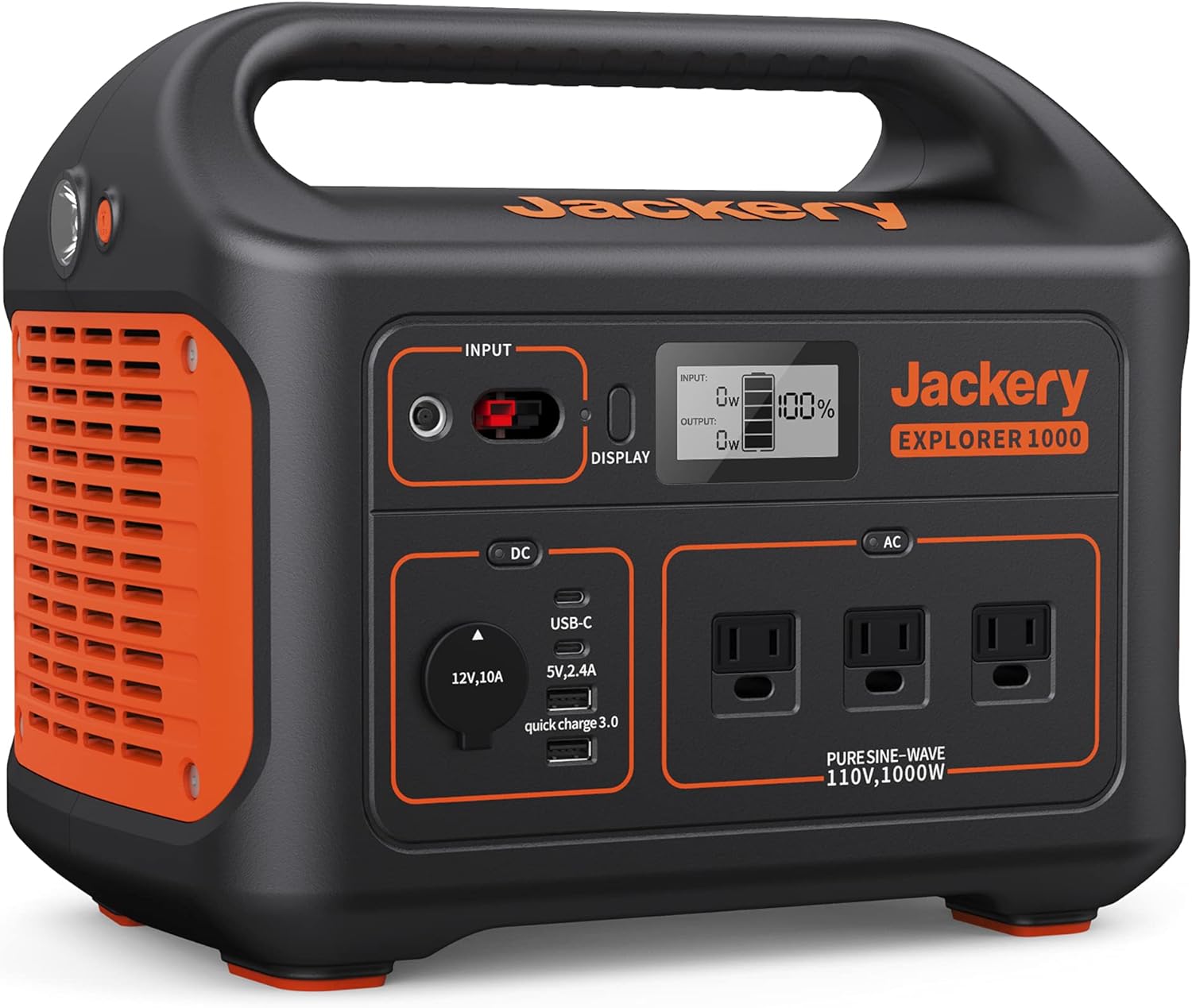
Jackery
Price shown in test: $1,499
Affiliate link. We may earn a commission at no extra cost to you.

EcoFlow
Price shown in test: $699
Affiliate link. We may earn a commission at no extra cost to you.
The quick take
The short version of why each pick lands where it does, built straight from the measured results.
“in my opinion, the best overall power station is definitely the Jackery. It also earned A's in every category and it has about twice the watt hour capacity. Even though it is a very good power station, it's also very expensive.”
Best in 1 of 4 measurements, including 15 hour standby drain.
Best in 1 of 4 measurements, including 15 hour standby drain.
The measured results
Every number below is read straight from the test. Products are listed in the order they finished.
Claimed spec
- 1Jackery
rated 2200 W, 4400 W peak, 2042 Wh capacity, claims 41% lighter and 34% smaller than a typical 2 kW power station, 30 peak dB charging noise, 0 to 80% in 66 min AC fast charge, full charge in 102 minutes
- 2EcoFlow
narrator states 'It's rated for 1024 W. It can handle up to 1800 W' at introduction, but later in the max output test says 'The EcoFlow is rated for 1,800 W' and it performed very close to that rating at 1,801 W; these two statements of its rated wattage are inconsistent, kept verbatim rather than resolved. Also claims 7 times faster charging (0 to 80% in 50 min, 0 to 100% in 80 min), solar charging up to 500 W, life cycle over 3000 cycles
- 3Segway
rated 2,200 W, 1,024 Wh capacity, claims recharge in 1.2 hours, over 4,000 cycles, 97% efficiency; uses lithium iron phosphate battery like all units tested
- 4OUPES
rated 2,000 W with surge to 4,500 W, 1,024 Wh capacity, claims pure sine wave output, 0 to 80% charge in 36 minutes ('if you could buy an AC with solar, just 26 minutes' per transcript, kept verbatim, exact meaning unclear), claims 3x faster charging than conventional stations, 3,500+ cycles, power transfer time under 20 ms
- 5Dabbsson
rated 2,200 W AC output with a boost feature up to 3,300 W, 2,048 Wh total capacity, claims 4,000+ charge/recharge cycles, 0 to 80% recharge in 1.5 hours, multiple quiet operation modes, seamless backup with less than 15 ms EPS switching, up to 12 devices simultaneously with intelligent current management
- 6Bluetti
rated 1,800 W or 3,600 W surge; total capacity stated as 1,024 Wh at introduction, but later restated as 1,152 Wh in both the battery capacity test and the charging test sections (internally inconsistent, kept verbatim, the 1,152 Wh figure is corroborated twice); claims smaller/lighter design at 25 lb and 17 L, full charge in 70 minutes, up to 11 devices at once
- 7DJI Power
claims handling up to 2,600 W, 0 to 80% recharge in 37 minutes, marketed as 'a really quiet generator at only 26 decibels', dual 140 W USB-C charging ports, UPS capability with a 10 ms switch time, 1,024 Wh total capacity
- 8Anker
rated 2,000 W with surge up to 3,000 W, claims 14% smaller and 11% lighter than similar models, at least 80% capacity retained after 4,000 cycles, 49-minute ultra-fast recharge claim, 1,024 Wh total capacity
- 9Grecell
rated 2,200 W, 4,800 W peak, total capacity 1,126 Wh, claims full charge in 1.25 hours, 13 total ports, life cycle of 3,500 cycles, 20 ms switch time on power outage
Weight
- 1Jackery39.13 lb
- 2EcoFlow26.5 lb
- 3Segway35.91 lb
- 4OUPES27.8 lb
- 5Dabbssonclose to40 lb
- 6Bluettijust under25 lb
described as the lightest yet at that point
- 7DJI Power31.24 lb
- 8Ankerjust under25 lb
- 9Grecell44.86 lb
Idle bench
- 1Jackery60 Hz
119.74 V, about 9 W difference between the two energy meters
- 2EcoFlow60 Hz
about 119.4 V
- 3Segway121 V
per multimeter, described as accurate
- 4OUPESclose to60 Hz
and 120.48 V without a load
- 5Dabbssonjust over120 V
and 60 Hz
- 6Bluetti
very close to 60 Hz and just over 120 V; about 11 W difference between the two meters, around 119.4 V and 60 Hz under light load
- 7DJI Powerright at60 Hz
and close to 119.5 V without a load
- 8Anker60 Hz
just under 120 V
- 9Grecell60 Hz
around 110.8 V, notably lower than the roughly 119 to 121 V range seen on every other unit tested (kept verbatim, not explained in transcript); watt meter on the unit read 18 W lower than the energy use meter; under load, 60 Hz and close to 110.16 V
Noise under light load
- 1Jackery45.4 dB2nd
second quietest of all 9 units behind EcoFlow's 37.8 dB
- 2EcoFlow37.8 dB
confirmed later in the recap as the quietest of all 9 units tested
- 3Segway58.9 dB
- 4OUPES67.4 dB
the loudest of all units up to that point in the video
- 5Dabbsson56.8 dB
described as the least noisy yet at that point in the video
- 6Bluetti48.1 dB3rd
confirmed later in the recap as third place, behind EcoFlow (37.8 dB) and Jackery (45.4 dB)
- 7DJI Power
measured at 55.7 dB, notably higher than the marketed claim of 26 decibels (kept both figures verbatim, not reconciled)
- 8Anker60.9 dB
- 9Grecell63.4 dB
described as one of the loudest so far
Air compressor + halogen lights
- 1Jackery
made easy work of one light and the compressor; with two lights already powered up, threw in the towel early (failed the two-light plus compressor test)
- 2EcoFlow
AC outlet initially powered itself down when the lights were plugged in, then powered the lights once the AC outlet was re-enabled; with one light it was struggling, around 106.25 V and 1,805 W (right at its max rating); it did kickstart the compressor but voltage dropped below 100 V which the narrator calls way too low; not clearly tested with two lights in the transcript
- 3Segway
easy work with the compressor alone plus one light; with two lights, experienced quite a bit of voltage drop at first but powered up both lights and the compressor, settling at 2,275 W with voltage down to 109.35 V
- 4OUPES
with one light, experienced quite a bit of voltage drop starting the compressor; with two lights, was not able to kickstart the compressor and voltage dropped to 94 V before the AC outlets powered down (failed the two-light test)
- 5Dabbsson
easy kickstart with one light already in use; easy work with two lights, kickstarting the compressor at 119.5 V and 2,554 W; three lights plus the compressor was too much for it (failed the three-light test)
- 6Bluetti
unable to kickstart the compressor with just one light; tried a second time and gave up early again; unable to power the compressor at all even without a light drawing current (total failure on this test)
- 7DJI Power
easy kickstart with one light; also powered up with two lights but powered back down after 8 seconds (partial pass, degraded under sustained two-light load)
- 8Anker
with one light, voltage dropped to 109 V; with two lights, voltage dropped to 105.5 V and the unit was overloaded, giving up after a few seconds (failed the two-light test)
- 9Grecell
kickstarted the compressor without a problem with one light; with two lights, voltage dropped to around 100 V before recovering to 109 V; the first (and only) unit in the video to kickstart the compressor with all three halogen lights running, described by the narrator as the winner of this specific test, settling near 2,600 W
Max continuous output
- 1Jackery
performed better than its 2,200 W rating for several minutes; ramped to 2,600 W demand which was too much and it powered down; finished second place overall in this test at 2,401 W behind DJI's 2,641 W
- 2EcoFlow
rated 1,800 W, performed very close to that rating at 1,801 W, voltage dropped quickly as demand increased further
- 3Segway
essentially maxed out at 2,275 W; when demand was increased further, voltage dropped to just under 108 V and watts dropped from 2,345 W to 2,261 W
- 4OUPES
rated 2,000 W; began experiencing significant voltage drop at 1,985 W; test ended around 107 V
- 5Dabbsson
handled a surge over 3,100 W; settled back to around 2,200 W after a couple of seconds, sustaining that level
- 6Bluetti
wasn't able to kickstart the air compressor, but performed well powering a space heater and lights at around 2,103 W
- 7DJI Power
produced 2,746 W for a few seconds before an alarm triggered; the alarm cleared around 2,641 W; came out on top of the max continuous output test at around 2,641 W, ahead of Jackery's 2,401 W
- 8Anker
rated 2,000 W, sat right at its 2,000 W rating; demanding more caused quite a bit of voltage drop
- 9Grecell
reached 2,465 W but the outlet powered down after a couple of seconds; able to sustain 2,200 W for a longer period
Battery capacity/runtime
- 1Jackery
rated 2,042 Wh (6 Wh less than Dabbsson's rating); lasted close to 75 minutes and produced 1,780 Wh, an efficiency of 87.2% (third place efficiency behind Dabbsson 91.8% and EcoFlow 87.9%; second place in raw watt hours produced behind Dabbsson's 1,880 Wh)
- 2EcoFlow
rated 1,024 Wh, barely reached 900 Wh and powered down at just over 38 minutes; finished third place in absolute watt hours produced, second place in efficiency at 87.9%
- 3Segway
completely drained at close to 33.5 minutes, 0.79 kWh (790 Wh)
- 4OUPES
lasted about a minute longer than Segway, producing 820 Wh, just over 80% of its rating
- 5Dabbsson
rated 2,048 Wh; lasted 78 minutes 40 seconds and produced 1,880 Wh, 91.8% of its rated capacity, the best efficiency of all 9 units and the highest absolute watt hours produced
- 6Bluetti
rated 1,152 Wh per the battery test narration (see spec inconsistency note); gave up sooner than EcoFlow at close to 36 minutes, producing 850 Wh
- 7DJI Power
rated 1,024 Wh, same as EcoFlow; powered down at 36 minutes 38 seconds, producing 870 Wh
- 8Anker
rated 1,024 Wh, lasted about 2 seconds less than DJI and also produced 870 Wh (effectively tied with DJI in this test)
- 9Grecell
rated 1,126 Wh; repeatedly powered itself down at 12% remaining charge rather than fully draining, producing 830 Wh; narrator tried several times and it would not go below 12%
Charging speed
- 1Jackery
fastest raw charging wattage of all 9 units tested, 1,701 W per the Jackery and 1,738 W per the analyzer; finished charging in 1 hour 20 minutes, requiring 2,220 Wh for a full charge; came out on top of the apples-to-apples charging-efficiency comparison at 22.3 usable watt hours per minute of charge time
- 2EcoFlow
showed 1,328 to 1,342 W on its own display versus about 1,336 W on the tester; needed about 5 minutes longer than OUPES to reach full charge, finishing at 57 minutes 20 seconds; took 1,180 Wh for a full charge
- 3Segway
drawing about 1,109 W per its own display versus about 1,514 W per the energy use meter (large discrepancy between the two meters, kept verbatim); finished charging in just over 1 hour 3 minutes, about 11 minutes longer than OUPES; took 1,040 Wh to charge, the same as OUPES
- 4OUPES
first of its charging group of three to reach 100%, finishing in 52 minutes 18 seconds; took 1.04 kWh (1,040 Wh) to charge
- 5Dabbsson
showed a charging rate of around 1,064 W matching the analyzer reading; finished charging in around 114 minutes 38 seconds; took 2,380 Wh to fully charge; third place in the apples-to-apples charging efficiency comparison at 16.4 usable watt hours per minute
- 6Bluetti
showed around 1,198 W versus about 1,214 W on the energy use meter; finished charging in 1 hour 8 minutes; took 1,130 Wh to charge
- 7DJI Power
charging at 1,447 W per both the energy use meter and the unit itself, faster than Bluetti; finished in 53 minutes 17 seconds, about 4 minutes behind Anker; took 1,170 Wh to charge
- 8Anker
fastest progress of the second charging group at 1,547 W per the Anker and 1,580 W per the analyzer; moved into first place for charging speed among all units at just under 49 minutes; took 1,180 Wh to charge; second place in the apples-to-apples charging efficiency comparison at 17.8 usable watt hours per minute
- 9Grecell
the analyzer showed 1,116 W versus 1,095 W on the unit itself, described as not nearly as fast as some other brands; finished charging in close to 64 minutes, the fastest wall-clock time of its charging group because it has the smallest capacity of the three; took 1,111 Wh to charge; not named among the top 3 in the apples-to-apples charging efficiency recap (Jackery, Anker, Dabbsson)
All measurements (5 more)+
UPS test
- 1Jackery
performed very well with only a brief light flicker; computer stayed powered on
- 2EcoFlow
performed well with just a very brief light flicker; computer did not power down
- 3Segway
very brief light flicker, computer remained up and running
- 4OUPES
very brief light flicker, computer stayed up and running
- 5Dabbsson
performed extremely well, not even a light flicker, computer did not power down
- 6Bluetti
performed well, narrator did not even see a light flicker, the best UPS result described in the video
- 7DJI Power
brief light flicker but the computer did not power down
- 8Anker
even less flicker than the other units tested, computer stayed powered up
- 9Grecell
the only unit where the computer actually powered down during the UPS test; the light also powered down for about half a second
15 hour standby drain
- 1Jackery89%
remaining after 15 hours, the best of all 9 units tested
- 2EcoFlow82%
remaining after 15 hours, described as by far the best yet at that point in the video (before Bluetti, Dabbsson, and Jackery were tested)
- 3Segway
dropped from 100% to 73% after 15 hours
- 4OUPES
described as having a really high idle consumption rate, dropping from 100% to only 55% after 15 hours
- 5Dabbsson85%2nd
remaining after 15 hours, second best of all units tested (moved into the lead at the point it was tested, later passed only by Jackery's 89%)
- 6Bluetti84%
remaining after 15 hours, performing better than EcoFlow's 82% at that point
- 7DJI Power
described as having a pretty high idle consumption rate at 69% remaining after 15 hours
- 8Anker79%
remaining after 15 hours, described as better than average
- 9Grecell81%
remaining after 15 hours, described as better than average
Light load test
- 3Segwayclose to1,445 W
at 60 Hz, voltage just over 120 V
- 4OUPES
powered up the lights almost immediately; energy use meter read 1,447 W versus 1,442 W on the unit itself
- 5Dabbsson
very close to 120 V and still 60 Hz after powering up the lights; energy use meter in the 1,440 W range with the unit itself in the 1,420s
- 7DJI Power
made very easy work of powering up the lights, settling close to 119 V and still 60 Hz; within 1 W of the energy use meter
- 8Anker
described as off by far the most of any unit so far, around 31 W difference between the two meters
- 1Jackerynot tested
- 2EcoFlownot tested
- 6Bluettinot tested
- 9Grecellnot tested
Estimated appliance runtime
- 1Jackery
came out on top with the highest estimated run times overall; example given, approximately 29.2 hours to power a full size refrigerator
- 2EcoFlownot tested
- 3Segwaynot tested
- 4OUPESnot tested
- 5Dabbssonnot tested
- 6Bluettinot tested
- 7DJI Powernot tested
- 8Ankernot tested
- 9Grecellnot tested
USB-C port test
- 9Grecell
the only unit that failed its advertised USB-C spec: one port rated for 100 W only reached 53 W, a second port rated for 18 W only reached 1 W
- 1Jackerynot tested
- 2EcoFlownot tested
- 3Segwaynot tested
- 4OUPESnot tested
- 5Dabbssonnot tested
- 6Bluettinot tested
- 7DJI Powernot tested
- 8Ankernot tested
How it was tested
- idle voltage/frequency bench check, no load
- powering three halogen lights (roughly equivalent to over 150 LED lights), wattage/voltage/noise under light load
- noise level test in decibels under light load
- kickstarting/powering a 33 gallon air compressor already at 90 PSI plus up to 3 halogen lights, surge capacity test
- maximum continuous output wattage test, ramped via fan speed controller and space heater until overload
- total battery watt hour capacity and runtime test, drained via halogen lights with a timer
- recharge time and total watt hours to full charge, 3 units charged simultaneously per group
- sine wave cleanliness ('dirty power') test under a drill load
- uninterruptible power supply (UPS) test, computer plus light with wall power disconnected
- 15 hour standby idle power drain test
- USB-C port output wattage spec check
- estimated appliance runtime calculations (e.g., full-size refrigerator)
“in my opinion, the best overall power station is definitely the Jackery. It also earned A's in every category and it has about twice the watt hour capacity. Even though it is a very good power station, it's also very expensive.”