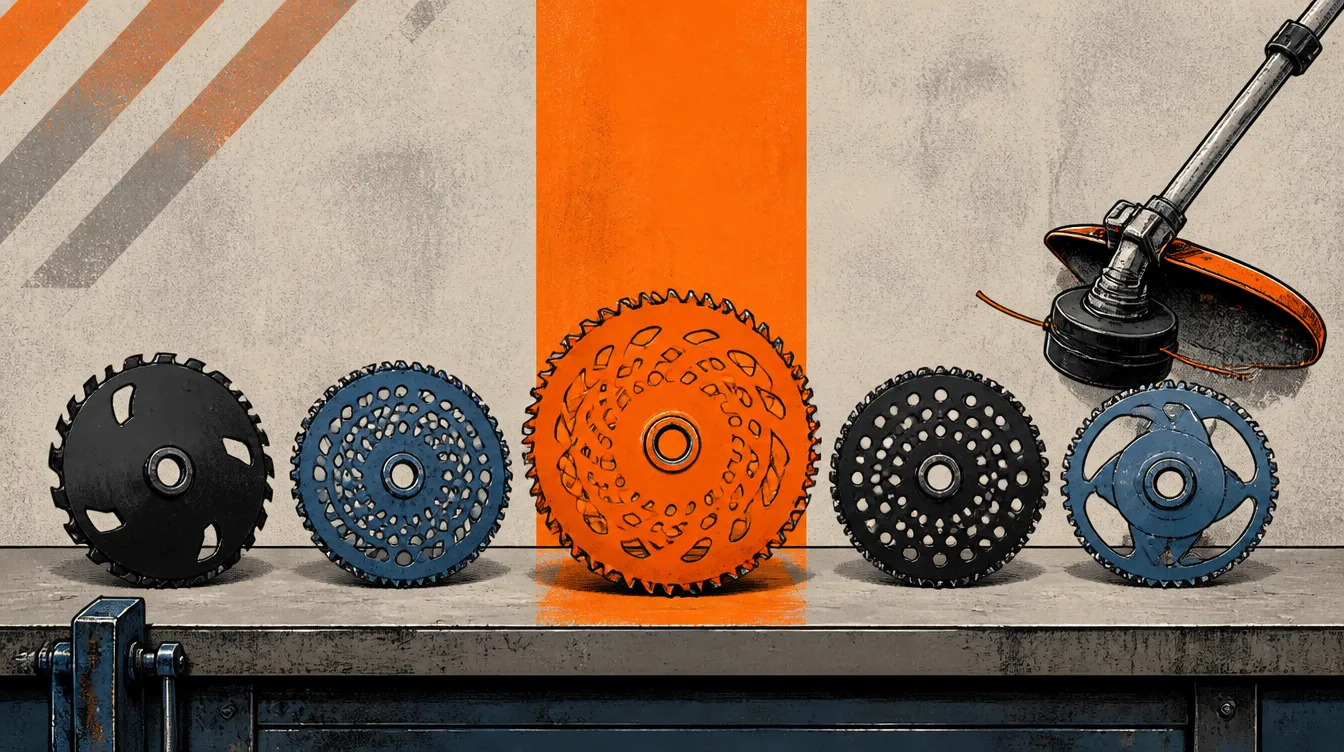
Brush Cutter Blade 2020 Test: Which Brand Wins?
In our 2020 test we compared 8 brush cutter blade options head to head. Renegade Hybrid came out on top. See the measured results, the runner-up, the budget pick, and a link to the full test video.
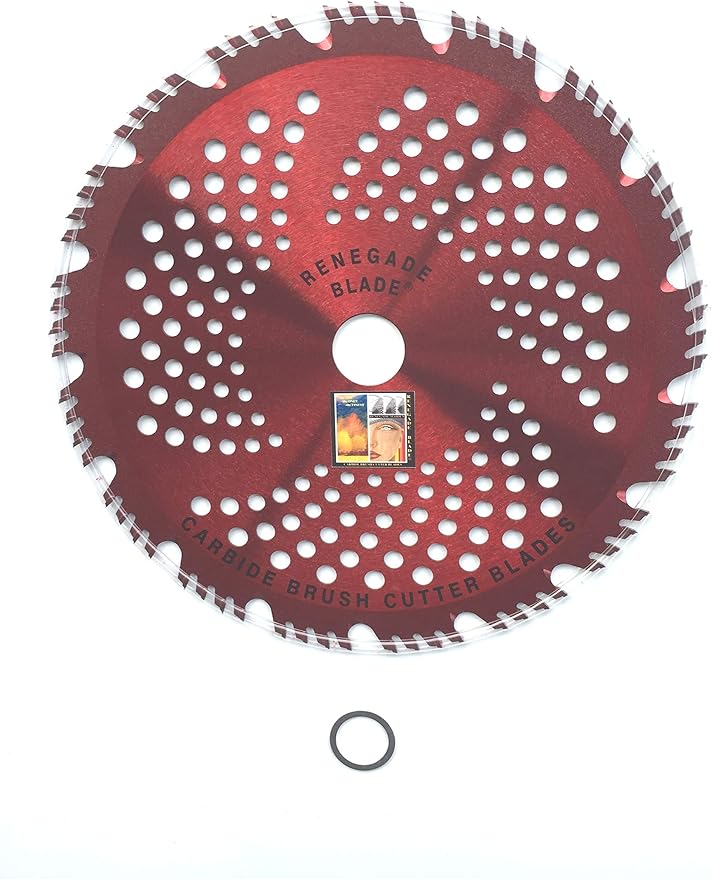
Renegade Hybrid
Price shown in test: $15
Affiliate link. We may earn a commission at no extra cost to you.
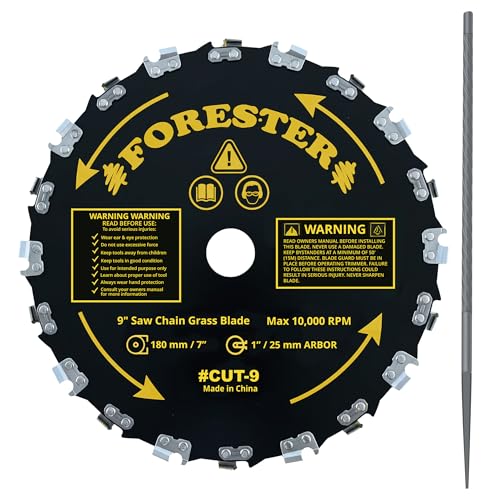
Forester
Price shown in test: $23.95
Affiliate link. We may earn a commission at no extra cost to you.
Renegade Hybrid
Price shown in test: $15
Affiliate link. We may earn a commission at no extra cost to you.
The quick take
The short version of why each pick lands where it does, built straight from the measured results.
“The metal pole and the concrete block caused a lot of damage to the blades, but the renegade hybrid came in on top at 4 seconds.”
Best in 1 of 5 measurements, including 2 inch tree cut.
Placed top three in 1 of 5 measurements.
Best in 1 of 5 measurements, including 2 inch tree cut.
The measured results
Every number below is read straight from the test. Products are listed in the order they finished.
Specs
- 1Renegade Hybrid68
carbide-tipped teeth, directional, made in China, 328 g (lightest blade tested), blade thickness 1.3mm, carbide tip thickness 2mm, carbide hardness about 8 to 9 on the Mohs tester
- 2Forester20
chainsaw-style teeth on a steel disc, includes a sharpening file, made in China, directional, 534 g (heaviest blade at the point it was introduced, later exceeded by Husqvarna's 582 g), teeth hardness 7 to 8, blade thickness 1.7mm, tooth offset about 7.3mm
- 3Husqvarna Multi 300 3T
steel blade designed for grass (not brush), made in Norway, bi-directional 3-blade design (both sides sharpened), heaviest blade tested at 582 g, no sharp edge or tooth offset (intentionally blunt), thickness 3.7mm (more than twice as thick as some other blades), hardness 6
- 4Oregon8 inch
20 tooth, made in Sweden, marketed for small trees/brush/weeds/grass, directional (one rotation direction only), 339 g, includes sharpening instructions, blade thickness 1.5mm, tooth offset 2.58mm, hardness 6
- 5Echo10 inch
80 tooth, made in Japan, rated for material up to 3.5 inch diameter, directional, 507 g, blade thickness 1.5mm, tooth offset about 2mm, hardness 5
- 6Stihl80 tooth
made in Japan, 364 g, blade thickness 1.77mm, tooth offset 3.38mm, hardness 6; most expensive blade tested, about 4 times the price of the cheapest (BlueCatELE)
- 7Euros
brush cutter with six separate blades, each sharpened on both sides (bi-directional), made in China, 400 g, blade thickness 1.74mm, hardness 6
- 8BlueCatELE
made in China, packaging describes it as a directional blade for brush cutters only, but both leading and trailing edges are sharpened, which the narrator notes makes it appear usable in either rotation direction, a packaging inconsistency; 336 g (lighter than the stock 383 g trimmer cord dispenser), thickness 1.6mm, hardness 5 on the Mohs tester, described as not very sharp
1 inch tree cut
- 1Renegade Hybridunder1 second
barely lost speed
- 2Forester
did not slow the blade down at all, described as very fast
- 3Husqvarna Multi 300 3T
successfully cut a 1 inch or smaller tree despite lacking a sharp edge, due to the blade's mass; not tested on larger material because the design is not suited for brush over 1 inch
- 4Oregon
cut through just as well (fast) as the Renegade
- 5Echo
took longer than the Renegade, Oregon, and Forester
- 6Stihl
did just as well as any of the other blades
- 7Euros
did a better job than the BlueCatELE, though not as well as the Renegade
- 8BlueCatELE
could not completely cut through the tree, the only blade to fail at this smallest size
Metal pipe impact test
- 1Renegade Hybrid
carbide teeth cut right through the (thinner than intended) galvanized pipe without a problem, but the impact caused minor damage to a couple of teeth
- 2Forester
teeth are made of much harder steel than most other blades and harder than the pipe itself; took a big chunk out of the pipe, and several teeth experienced damage
- 3Husqvarna Multi 300 3T
handled direct impact with metal with no noticeable damage, the best performer in this test
- 4Oregon
cut about a third of the way through the pipe; the pipe caused minor damage to the blade and most of its teeth
- 5Echo
only minor abrasions on the pipe itself, but the pipe caused quite a bit of dulling to all of the teeth on the Echo blade
- 6Stihl
like the Echo, the pipe caused minor damage to all the teeth on the blade
- 7Euros
left a few marks on the pipe; the pipe caused only minor damage to the very tips of the blades
- 8BlueCatELE
created a few sparks bouncing off the metal, minor damage to the blade's edge
Cinder block impact test
- 1Renegade Hybrid
damage to several more carbide teeth, but most teeth still very sharp and in good condition
- 2Forester
quite a bit of damage to several teeth, but some teeth still in pretty good condition
- 3Husqvarna Multi 300 3T
only very minor abrasions to the end of the blade, looked as good as new, again the best performer in this test
- 4Oregon
pretty significant, fairly consistent damage to all the teeth on the blade; did not hold up as well as the Renegade
- 5Echo
quite a bit of damage to all of the teeth; did not hold up as well as the Renegade or Forester
- 6Stihl
like the Echo, all teeth experienced pretty significant damage
- 7Euros
quite a bit more damage to the leading edge of all six blades
- 8BlueCatELE
caused a lot more wear and tear than the metal pipe test did
Grass mulching/discharging
- 1Renegade Hybrid
did not do well mulching or discharging clippings
- 2Forester
packaging claims it is designed for grass, but it did not do well mulching or dispersing clippings
- 3Husqvarna Multi 300 3T
best of all blades tested at mulching and dispersing grass clippings; the blunt leading edge cuts and disperses simultaneously
- 4Oregon
grouped with the majority of round, short-toothed blades that did not mulch or disperse clippings well
- 7Euros
did a decent job mulching grass, slightly better than the Renegade and BlueCatELE at dispersing clippings
- 8BlueCatELE
did not mulch well; cut the grass fine but clippings gathered on top of the blade instead of discharging
- 5Echonot tested
- 6Stihlnot tested
2 inch tree cut (undamaged)
- 1Renegade Hybridunder1 second
lost a lot of speed but still fast
- 2Forester
made a faster cut than both the Oregon and Renegade
- 4Oregonunder1 second
same as the Renegade
- 5Echoabout8 seconds
the slowest of the brands tested at this size
- 6Stihl2 seconds
a little slower than the Renegade, Oregon, and Forester (all under 1 second)
- 7Euros
too much for it, could not cut through; not recommended for heavy brush
- 3Husqvarna Multi 300 3Tnot tested
- 8BlueCatELEnot tested
3.5 inch tree cut (undamaged)
- 1Renegade Hybrid7 seconds
lost a lot of speed and experienced a lot of friction in the kerf
- 2Forester1 second
by far the fastest of all blades on this size, described as very impressive
- 4Oregon5 seconds
a little faster than the Renegade
- 5Echoabout30 seconds
by far the slowest of all blades at this size
- 6Stihl10 seconds
- 3Husqvarna Multi 300 3Tnot tested
- 7Eurosnot tested
- 8BlueCatELEnot tested
2 inch tree cut (after both damage tests)
- 1Renegade Hybridjust over4 seconds1st
the fastest of all the damaged blades retested, 1st place
- 2Forester7 seconds2nd
2nd place among the damaged blades retested
- 4Oregonjust over8 seconds3rd
3rd place among the damaged blades retested, a big slowdown from its sub-1-second undamaged time
- 5Echo22 seconds
the slowest of the damaged blades retested, both before and after the damage tests
- 6Stihl11 seconds4th
4th place among the damaged blades retested
- 3Husqvarna Multi 300 3Tnot tested
- 7Eurosnot tested
- 8BlueCatELEnot tested
How it was tested
- grass mulching and clipping-discharge performance (qualitative)
- brush cutting speed on 1 inch, 2 inch, and 3.5 inch diameter trees (undamaged blades)
- durability: direct impact against a galvanized steel pipe, damage assessed
- durability: direct impact against a cinder/concrete block, damage assessed
- brush cutting speed on the 2 inch tree again using the same blades after both impact-damage tests
“The metal pole and the concrete block caused a lot of damage to the blades, but the renegade hybrid came in on top at 4 seconds.”
Data notes and caveats
This is effectively a dual-category video: the title and majority of testing frame it as a brush-cutting blade showdown (won by Renegade Hybrid on the decisive post-damage retest, with Forester praised as a strong alternative for its resharpenability), but the video separately and explicitly names Husqvarna as the best pick specifically for a grass blade, a different use case that Husqvarna was not tested against the others for (it was only run through the 1-inch tree test, not 2-inch, 3.5-inch, or the post-damage retest). Winner/runnerUp/budgetPick reflect the primary brush-cutting category only; Husqvarna's grass-specific recommendation is preserved here rather than forced into those fields. The closing statement itself presents Renegade (value plus speed, but disposable carbide teeth) and Forester (resharpenable, slightly slower after damage) as two good but different options rather than crowning one outright; the verdictQuote and winner field lean on Renegade's outright win in the final, most decisive test (post-damage 2-inch cut speed) as the tiebreaker. The brand tested at $42.95 is rendered as 'steel' or 'still' throughout the transcript, a phonetic caption mangle resolved to Stihl via the video description and matching price/spec details. The Husqvarna Multi 300 3T's price is incomplete in the transcript (only '...dollars and 25 cents' survived, the leading digit(s) dropped); kept null rather than guessed, though context implies a value between Echo's $35.80 and Stihl's $42.95. BlueCatELE and Euros were each excluded from later-stage tests after failing to fully cut through the 1-inch and 2-inch trees respectively; this is a genuine test failure, not a data gap.